
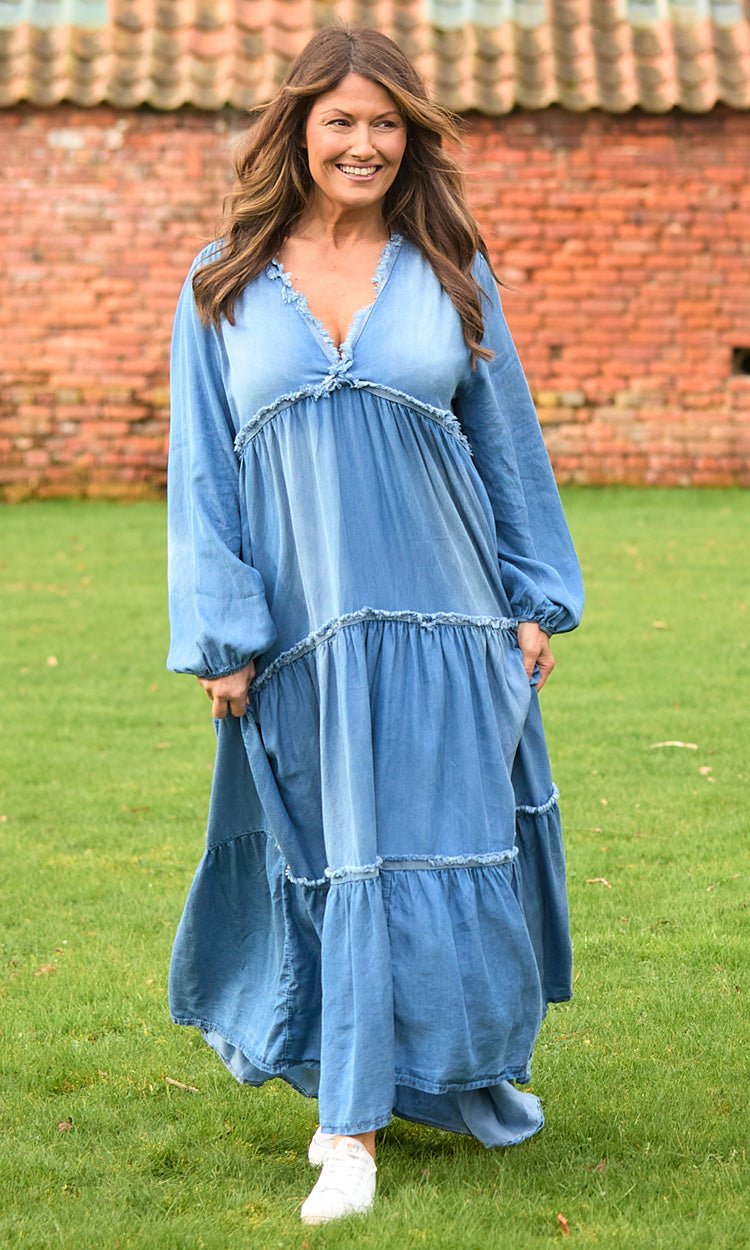
One of the joys of lagenlook dressing is how much the overall feel of an outfit changes depending on fabric. The silhouettes may stay relaxed, layered and easy, but swap linen for needlecord or jersey and suddenly the drape, warmth and movement tell a completely different story. Understanding fabric is what takes an outfit from “nice” to “this feels like me”.
Think of this as a close-up look at three favourites (linen, needlecord and jersey) viewed almost like fabric swatches in your hand. How do they fall? How warm are they? How much care do they need? And how well will they stand up to real life?
First glance: how each fabric drapes on the body
Imagine holding three swatches side by side.
Linen looks slightly textured, with a visible weave and a soft, matte finish. When you lift it, it doesn’t cling - it falls away from the body in a gentle, airy line. In lagenlook pieces, linen creates that beautiful architectural shape: tunics that skim rather than stick, trousers that hang straight from the hip, dresses that float as you walk. The drape is relaxed and natural, with a touch of structure that helps layered shapes keep their form.
Needlecord, by contrast, has fine vertical ridges you can feel under your fingertips. It’s more substantial straight away. When you hold it up, it doesn’t drop as fluidly as linen; it has body. In lagenlook styles, this gives garments a softly sculpted look. Pinafores hold their A-line shape, jackets keep a boxy silhouette, and trousers have a gentle firmness that defines the outline of the outfit without feeling stiff.
Jersey feels completely different again. Smooth, stretchy and pliable, it almost melts over your hands. Lift a jersey tunic and it flows, bends and follows movement. In lagenlook, jersey softens everything. Layers glide over one another, hems swing, and shapes feel more fluid and body-aware, even when the cut is loose.
If linen is airy structure and needlecord is soft shape, jersey is movement.
Warmth: what these fabrics feel like across the seasons
Linen is the coolest of the trio. Its breathable weave allows air to circulate, which is why it’s such a staple for spring and summer layering. In lagenlook outfits, linen works as the foundation when you still want layers but not heaviness - think a sleeveless linen dress over a light top, or wide-leg linen trousers with a relaxed shirt. In cooler months, linen can still play a part, but usually as a layer combined with knits or heavier outer pieces.
Needlecord sits firmly in the cosy middle. Those fine cords trap warmth, making it ideal for autumn and winter without feeling bulky. A needlecord pinafore over a long-sleeved top or a cord jacket layered over a tunic brings instant seasonal comfort. It’s the fabric that makes layered dressing feel snug rather than breezy.
Jersey varies depending on thickness, but generally offers gentle, close-to-the-body warmth. Because it sits nearer the skin and often forms base or mid-layers, it’s brilliant for regulating comfort. A long jersey top under linen or cord adds warmth without weight. In lighter weights, jersey also works year-round, especially indoors or in milder weather.
Side by side, you can almost see the seasonal spectrum: linen for airflow, needlecord for insulation, jersey for adaptable comfort.
How each fabric behaves after washing
Fabric swatches tell another story once they’ve been worn, washed and lived in.
Linen is known for its natural creases, and that’s part of its charm. After washing, it may need a gentle reshape and, if you prefer a crisper look, a light iron. Many people embrace the relaxed rumple, which suits lagenlook’s easy aesthetic perfectly. Linen is happiest when treated kindly: cooler washes, avoiding overload in the machine, and air drying to maintain its fibres.
Needlecord is surprisingly practical. The ridged surface hides minor creases and everyday marks well. It generally washes nicely and comes out ready to wear with minimal fuss, especially in looser lagenlook cuts where perfection isn’t the goal. Turning garments inside out before washing helps protect the pile and keeps the texture looking fresh.
Jersey is often the easiest of all. Its stretch and softness mean it resists creasing, and it usually dries quickly. Most jersey pieces can be washed, dried and worn again with very little intervention. The key is to avoid excessive heat, which can affect elasticity over time.
From a care perspective, jersey is low-maintenance, needlecord is steady and forgiving, and linen asks for a bit more attention but rewards you with character.
Durability: how these fabrics stand up to real life
Linen fibres are naturally strong, which means garments can last for years when cared for well. Over time, linen often becomes softer rather than worn out, developing a lived-in feel that many people love. Because lagenlook styles tend to be looser and less strained at seams, linen pieces often age gracefully.
Needlecord is a bit of a workhorse. The structure of the fabric gives it resilience, especially in outer layers like jackets or pinafores that see plenty of wear. The ridges can flatten slightly in high-friction areas over a long time, but overall it’s a dependable choice for everyday dressing.
Jersey durability depends on quality and weight. Good jersey with strong fibres and recovery will keep its shape wash after wash. Because it stretches, it moves with the body rather than fighting it, which can reduce strain. However, very lightweight jerseys may show wear sooner if they’re in constant rotation.
Placed side by side, linen shows longevity through fibre strength, needlecord through sturdy construction, and jersey through flexibility.
How they work together in lagenlook
The real magic happens when these fabrics aren’t competing, but layered.
Picture the swatches stacked: a soft jersey base, breathable linen over the top, and a needlecord layer to finish. The jersey provides comfort and movement, linen adds shape and lightness, and needlecord brings warmth and structure. Each fabric plays to its strengths, creating depth not just in silhouette but in texture and feel.
This is the heart of lagenlook dressing: mixing materials so outfits feel interesting, practical and personal. Some days call for mostly linen and airiness. Others lean into the cosiness of cord. And often, it’s jersey quietly doing the behind-the-scenes work that makes everything else feel good to wear.
Understanding these fabrics (how they drape, warm, wash and wear) means you’re not just choosing a style. You’re choosing how you want your clothes to move with you, support your day, and feel against your skin. And that’s where great layering truly begins!
